Thoughts on the passing of the late Supreme Court Justice, Ruth Bader Ginsburg, her voting record and a couple of unique facts about her style, and beliefs.

It’s taken a long time to conjure the correct words to write this. The amalgamation of her voting record on human rights is extensive, and I don’t know if I can summarize her entire past within the boundaries of this page, but here goes.
When I saw the news appear on my phone while I was in line to get popcorn at the Drive-In Theatre I was sad, and I began to cry a little. It was probably really strange for the people at the theatre to take money from a person shedding a few tears as he grabs his popcorn, but I think that’s about where we are as far as this year goes.
Ginsburg will be remembered as a staunch advocate for expanding the definition, and scope of what human rights are considered to be in the United States of America. Since her death, the internet has seen a high tide of “I dissent” posts honoring the late Supreme Court justice.
Known for her stances on women’s rights, Ginsburg was also a defender of human rights across all spectrums of society. One of her more popular majority opinions came in the case of Olmstead v. L.C. 1999, where she ruled that unjustified segregation of persons with disabilities constitutes discrimination in violation of title II of the Americans with Disabilities Act.
The Supreme Court majority ruling explained that recognizing unjustified institutional isolation of persons with disabilities as a form of discrimination reflects two judgments.
The first being “institutional placement of persons who can handle and benefit from community settings perpetuates unwarranted assumptions that persons so isolated are incapable or unworthy of participating in community life.” The other is that “confinement in an institution severely diminishes the everyday life activities of individuals, including family relations, social contacts, work options, economic independence, educational advancement, and cultural enrichment.”[1]
A lesser known decision by Ginsburg was her ruling in 2011 on violent video games. That year, a law was created in California that stated any persons who sold “violent video games” to minors would receive a civil fine of $1000.
The Supreme Court later ruled “Video games are a form of speech and are subject to protection under the First Amendment because it has proved difficult to distinguish between politics and entertainment. Games communicate ideas through literary devices. A well defined constitutional tradition is that restrictions based on the content of speech are permitted only in only a few areas, such as obscenity, incitement to violence, or uttering fighting words. Depictions of violence are not within this tradition.”
This decision was one of a few delivered by Antonin Scalia, another late Supreme Court justice, that Ginsburg joined.
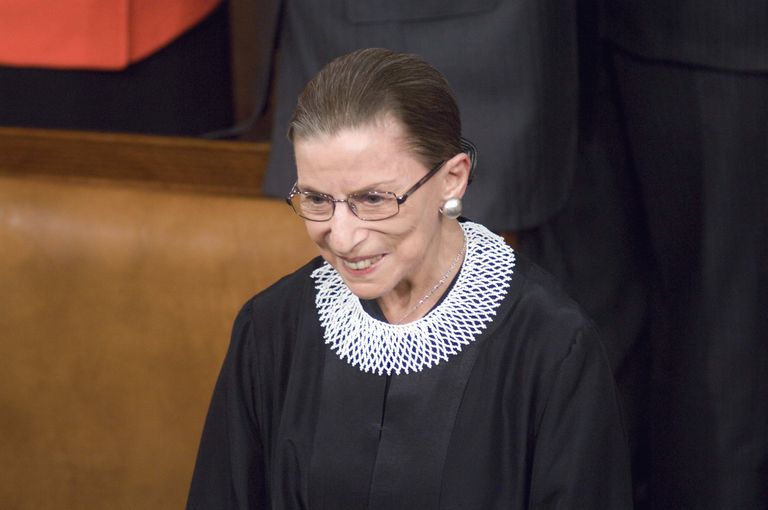
The Notorious RBG was known for her collars as well. The collars she wore represented her feelings, and she would wear different collars for specific occasions.
One of her collars she would specifically wear if she was giving the Majority opinion on a ruling. “When I’m announcing the opinion for the court, this is the collar I wear,” she once told Katie Couric during an interview she displayed her collar collection.
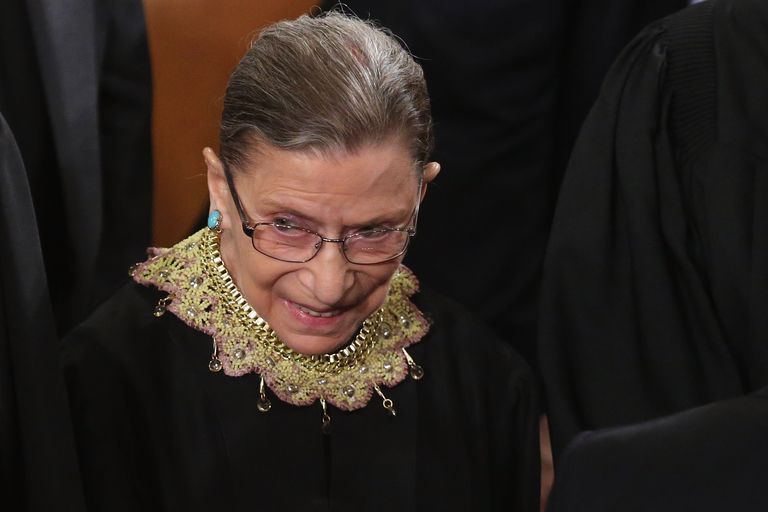
Then, there’s also her favorite jabot, a South African white knitted piece. She wore it for special occasions, such as inaugurations, or in the case of the photo below, a joint session of congress.
Finally, theres her original collar she wore for the first time as Supreme Court Justice.
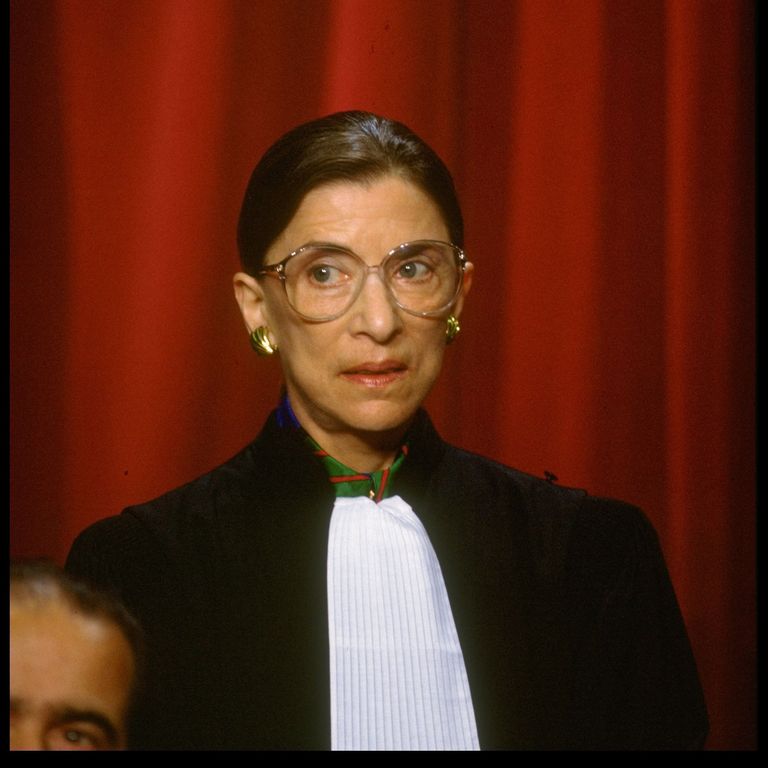
She explained to the Washington Post why she chose to wear one in the first place. “You know, the standard robe is made for a man because it has a place for the shirt to show, and the tie,” she said. ” So Sandra Day O’Connor and I thought it would be appropriate if we included as part of our robe something typical of a woman. So I have many, many collars.”
On September 24th, Six days after her passing, Ginsburg became the first woman in United States history to lie in state in the United States Capitol. She was the second woman to ever serve on the nation’s highest court as well.
 Use Your Imaginasean